



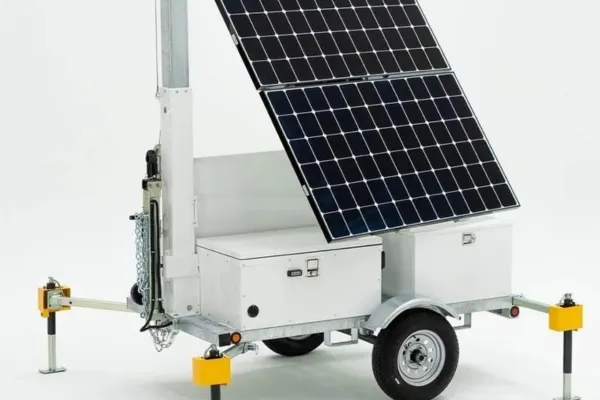
Mobile Surveillance Trailers: The Complete Guide to Portable Security for Remote and Temporary Sites
Mobile surveillance trailers are increasingly relied on to protect remote and short-term locations where permanent security infrastructure isn’t practical. These portable systems deliver flexible, reliable monitoring that adapts to changing site needs. In this guide, we cover how these trailers work, the benefits they offer, typical applications, and how to choose the proper configuration. With theft and vandalism rising at construction sites and events, understanding portable surveillance — including advances in AI and remote monitoring — helps you reduce risk and respond faster.
What is a Mobile Surveillance Trailer and How Does It Work?
A mobile surveillance trailer is a self-contained security unit on a towable platform, fitted with cameras, sensors, power, and communications so it can be deployed quickly wherever it’s needed. Components work together to record and stream high-definition video, trigger alerts, and provide remote access through secure connections. This setup enables near-instant situational awareness and faster incident response at temporary or hard-to-reach sites.
Key Components of Portable Security Camera Systems
Portable security camera systems inside mobile trailers rely on a few core elements to deliver dependable coverage. These include:
Cameras: High-resolution cameras capture clear daytime and low-light footage; many include infrared or low-light sensors for night monitoring.
Power Sources: Trailers use solar arrays, battery banks, or diesel/electric generators to run where grid power isn’t available.
Communication Technologies: Cellular networks (4G/5G), private LTE, or Wi‑Fi link trailers to monitoring stations and cloud services for live viewing and fast alerts.
Knowing these components helps you evaluate a trailer’s capability and suitability for a given site.
How Trailer-Mounted Security Enables Rapid Deployment

Trailer-mounted systems are designed to move from delivery to active surveillance with minimal setup, making them ideal for temporary assignments. Key advantages include:
Speed of Setup: Most trailers can be positioned and fully operational in minutes to a few hours, depending on site requirements and onsite adjustments.
Flexibility in Location: Easily moved to cover new risk areas or reconfigured as site layouts change.
Ease of Transport: Designed for towing and quick installation, trailers simplify logistics for events, construction sites, and emergency deployments.
Fast deployment means organizations can close security gaps quickly and maintain continuous coverage during critical windows.
What Are the Core Benefits of Mobile Surveillance Trailers?
Mobile surveillance trailers deliver several practical benefits: they deter crime, reduce staffing costs, and provide continuous monitoring that adapts to changing site conditions.
How Mobile Surveillance Trailers Deter Theft and Vandalism
Visible trailers act as an obvious deterrent — most opportunistic thefts and vandalism are avoided when a site appears monitored. When incidents occur, live monitoring and alerting can notify on-site teams or law enforcement immediately, improving the chance of intervention and evidence capture.
Cost-Effectiveness Compared to Traditional Security Methods
For short-term or intermittent needs, a mobile trailer often costs less than hiring multiple round-the-clock guards. Beyond lower labor costs, trailers can reduce insurance exposure and asset replacement expenses. Operational expenses are predictable and frequently lower than those of long-term fixed security installations.
For organizations wanting reliable coverage without the long-term overhead of permanent systems, trailers are a compelling option.
Where Are Mobile Surveillance Trailers Used? Key Applications and Use Cases
These trailers are versatile and serve many sectors where temporary, mobile, or remote monitoring is required — from construction lots to outdoor events and critical infrastructure sites.
Construction Site Security: Enhancing Safety and Asset Protection
Construction sites are vulnerable to equipment theft and material loss. Mobile surveillance trailers provide 24/7 observation, recording evidence, and enabling quicker responses to trespass or theft, helping protect expensive tools, machinery, and supplies.
Event Security and Remote Site Surveillance Solutions
At events, trailers offer centralized monitoring for large crowds, perimeter control, and incident recording. Their ability to operate off-grid makes them ideal for festivals, fairs, sporting events, and other outdoor gatherings where temporary coverage is essential.
How to Choose the Right Mobile Surveillance Trailer for Your Needs?
Selecting the right trailer comes down to matching power, camera capabilities, and communications to your site conditions and security goals.
Comparing Solar-Powered vs. Generator-Powered Security Trailers
Power choice affects reliability, cost, and environmental impact. Solar systems reduce fuel spend and noise but rely on battery storage for extended cloudy periods. Generators supply steady power regardless of weather, but add fuel, maintenance, and noise considerations. Weigh site access, runtime needs, and sustainability goals when choosing.
This side-by-side view helps clarify trade-offs so you can select the best power strategy for the site.
Evaluating Camera Technologies and AI Video Analytics Features

Camera resolution, low-light performance, and AI analytics determine how effectively a trailer detects and classifies events. Features like motion-based alerts, license plate capture, and analytics-driven anomaly detection reduce false alarms and surface actionable incidents faster — essential for efficient monitoring.
What Are the Latest Trends and Future Outlook for Mobile Surveillance Trailers?
The industry is advancing quickly, driven by more intelligent analytics, faster networks, and cloud-based management. These trends are making mobile trailers more capable and easier to operate remotely.
Impact of AI, 5G, and Cloud Integration on Mobile Surveillance
AI improves detection and reduces manual review by highlighting relevant events in real time. 5G and upgraded cellular links speed up live video and lower latency for remote control. Cloud platforms centralize footage, enable scalable retention, and simplify multi-site management for security teams.
Market Growth Projections and Increasing Demand in 2024 and Beyond
Heightened security concerns and the need for flexible surveillance are expected to drive demand for mobile trailers. Organizations across construction, events, utilities, and remote industries are adopting these systems to improve safety while controlling costs through 2024 and beyond.
How Does Remote Monitoring Enhance Mobile Surveillance Trailer Effectiveness?
Remote monitoring extends the trailer’s value by enabling trained personnel to monitor multiple sites from a central location, respond to alerts faster, and manage systems without a constant on-site presence.
Real-Time Alerts and Off-Site Control Features
Real-time alerts notify responders when predefined events occur, enabling them to take immediate action. Remote control features let operators pan, tilt, zoom cameras, and change system settings from off-site, improving situational awareness and response precision.
Integration with Wireless Security and Cloud Platforms
Connecting trailers to wireless security ecosystems and cloud services creates a unified security architecture. This integration enables consolidated logs, shared alerts, and centralized video storage, making investigations and cross-site coordination faster and more effective.
Frequently Asked Questions
1. What types of industries benefit most from mobile surveillance trailers?
Mobile surveillance trailers are widely applicable — construction, live events, and remote site operations are common examples. They’re also valuable in oil & gas, mining, agriculture, and utilities, where permanent security is impractical but monitoring is critical to protect assets and personnel.
2. How do mobile surveillance trailers handle adverse weather conditions?
Trailers are built for outdoor use with weatherproof housings, heated enclosures, and ruggedized components to withstand rain, snow, and temperature extremes. Power and communication systems are selected to maintain uptime under challenging weather conditions, ensuring continuous monitoring.
3. Can mobile surveillance trailers be integrated with existing security systems?
Yes. Modern trailers are designed to be compatible with existing cameras, alarms, and VMS (video management systems). Integration lets you extend your current infrastructure with mobile coverage while keeping centralized control and unified incident workflows.
4. What are the maintenance requirements for mobile surveillance trailers?
Routine maintenance includes cleaning and inspecting cameras, verifying power systems and batteries, checking generator operation if present, and testing communications links. Regular software and firmware updates for cameras and analytics keep performance and security current.
5. How do mobile surveillance trailers support emergency response efforts?
Trailers provide live feeds and recorded evidence that speed decision-making during emergencies. Instant alerts and remote viewing let responders assess situations before arriving, improving coordination with law enforcement and first responders.
6. Are there any legal considerations when using mobile surveillance trailers?
Yes. Deployments must comply with local privacy, recording, and data protection laws. That may mean posting notices, limiting audio recording, or managing data retention policies. Consult legal counsel to ensure your deployment follows applicable regulations.
7. What advancements in technology are shaping the future of mobile surveillance trailers?
Key advancements include stronger AI analytics for more intelligent detection, expanded 5G/cellular options for higher-bandwidth streaming, and deeper cloud integration for scalable storage and centralized management. These technologies make trailers more effective and easier to operate at scale.
Conclusion
Mobile surveillance trailers offer a flexible, cost-effective way to secure temporary and remote sites. With clear deterrence, 24/7 monitoring, and advanced AI and connectivity, they enable organizations to respond faster and gain better situational awareness. By evaluating power, camera, and communication options, you can choose a trailer that matches your operational needs. Explore our mobile surveillance solutions to find the right fit for your sites and strengthen your security strategy.